

The Proven Framework for a Cinematic Destination Wedding Shoot
A destination wedding is never only a wedding day.
There is the arrival. The first dinner. The walk to the ceremony. The old stone underfoot, the weather moving across the hills, the long table after dark. There are the people who have travelled a long way to be there and the small moments that happen before anyone has thought to make them meaningful.
This is where cinematic wedding photography begins. Not with a fixed shot list or a collection of poses, but with attention.
At Fora, we approach destination weddings as visual stories shaped by place, light, movement, and feeling. The work is editorial in its composition but unforced in its atmosphere. There can be direction, but there is no need to manufacture a moment that is already happening.
The following framework is a way of thinking about the process. It gives a destination wedding room to unfold while keeping the final gallery connected, considered, and alive.
1. Begin with the place, not the pose
The destination should be more than a backdrop.
A wedding in the Italian countryside should feel different from a celebration on the coast of Maine, in a Moroccan riad, or at a remote desert property. The architecture, landscape, food, weather, and local rhythm all contribute to the story. They give the images their particular character.
Before we photograph the couple, we look at the surroundings.
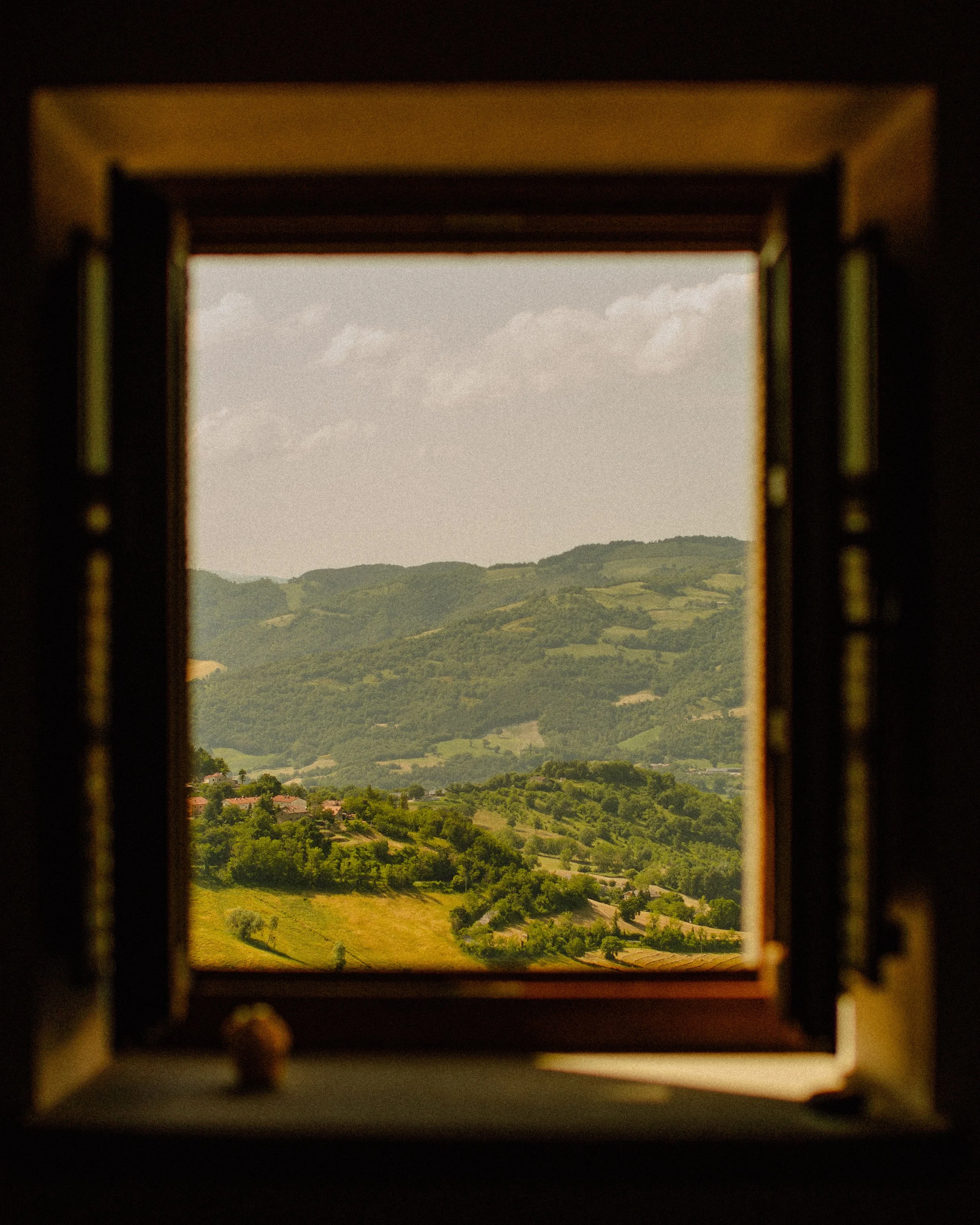
The road leading to the venue. A church façade in afternoon light. The view from a bedroom window. Cypress trees, worn plaster, linen curtains, a table being set, a glass left on a stone ledge. These details create a visual vocabulary for the weekend.
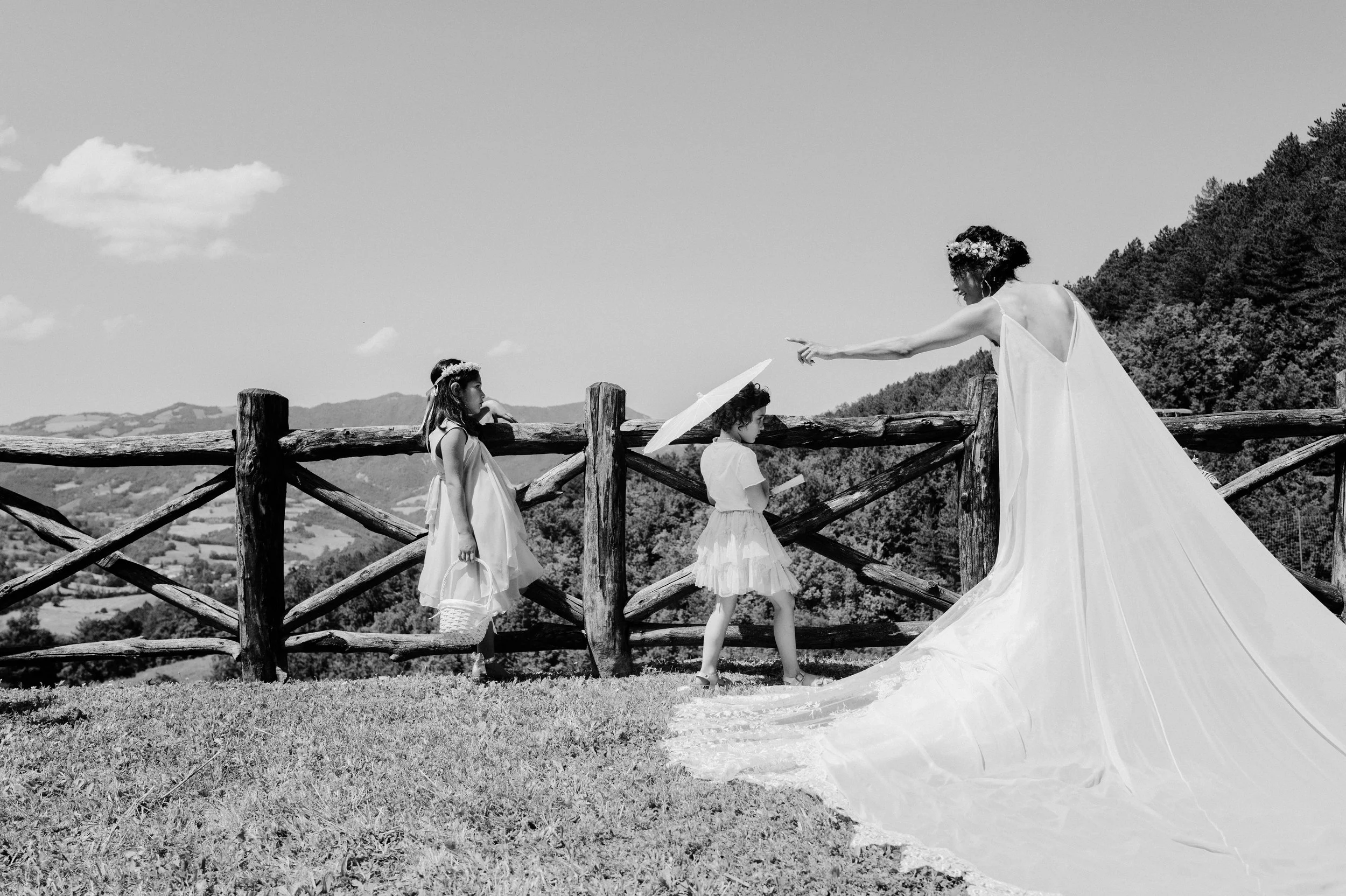
A sense of place also gives the couple space within the frame. Sometimes they are central. Sometimes they are small against a landscape, moving through a doorway, or almost hidden among the trees. This variation creates rhythm. It allows the images to feel like scenes from a larger film rather than a sequence of individual portraits.
The location is not decoration. It is part of the memory.
2. Build a story across several days
The strongest destination wedding galleries do not begin when the ceremony starts. They gather meaning over time.
A multi-day approach allows the story to move through different registers:
- Arrival: travel, welcome, first impressions, and the feeling of entering a new place.
- Gathering: dinners, rehearsals, welcome drinks, and the gradual meeting of families and friends.
- The wedding day: preparation, ceremony, portraits, celebration, and the quieter moments between each.
- The day after: a slower morning, an informal meal, a walk, or a final portrait session before everyone leaves.
Each part has its own pace. The welcome dinner may feel loose and social. The wedding morning may be quiet, with fabric, coffee, and window light. The reception carries more movement. The farewell is often softer again.
This creates a natural arc without forcing the weekend into a dramatic narrative. We are simply paying attention to what is already there.
Our Bagno di Romagna wedding celebration was shaped by this kind of pace. The day moved through laughter, conversation, landscape, and golden light. It felt less like an event being directed and more like a group of people settling into the place together.
The gallery should hold that same sense of time.
3. Use natural light as the structure
Natural light does more than flatter a subject. It establishes mood.
Morning light through a bedroom window can make preparation feel private and calm. Midday light can bring out the strength of a landscape or the texture of old stone. Late afternoon softens the edges of a portrait. Candlelight and ambient evening light allow the reception to remain warm and imperfect.
Rather than forcing every image into the same lighting style, we follow what the day offers.
This often means building the timeline around the light. Portraits may happen in the late afternoon, when the sun is low and the surroundings begin to glow. Family photographs may be made in open shade. Preparation can stay close to windows instead of being moved into a more convenient but less interesting room.
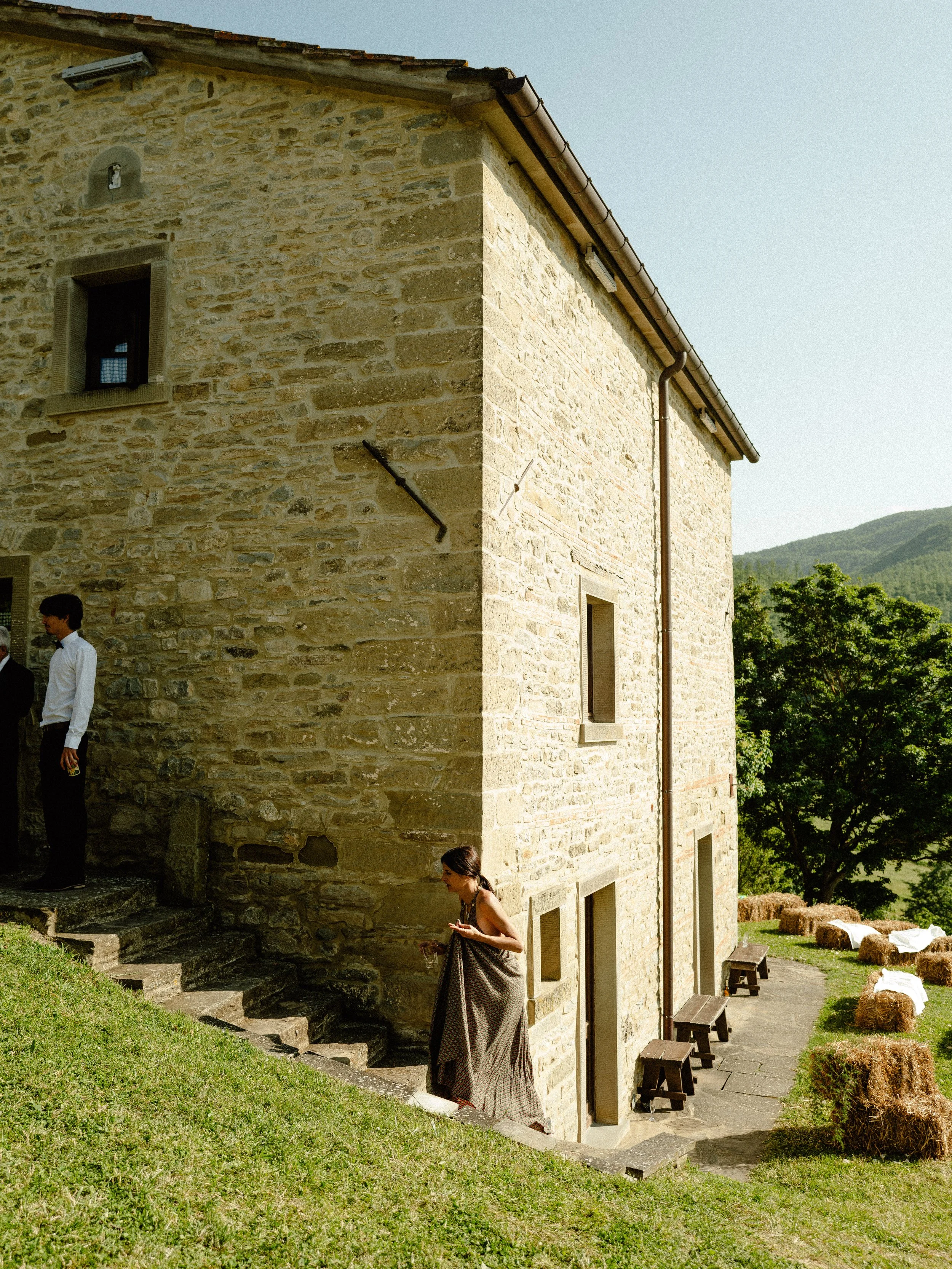
The goal is not to use natural light as a rule. It is to let the light belong to the place.
When additional light is needed, it should support the atmosphere rather than flatten it. A reception can still feel like a reception. Shadows can remain open. A little grain, movement, or softness can be part of the image.
Light should feel lived in.
4. Combine editorial direction with real movement
Editorial does not have to mean stiff.
There is a place for considered portraits, especially during a destination wedding. The landscape may call for a strong, quiet frame. The dress may need room to move. The couple may want an image with the clarity and shape of a magazine photograph.
But direction works best when it stays simple.
We might ask a couple to walk toward a particular patch of light, pause at the edge of a field, or stand together beneath a row of trees. From there, the image can be allowed to change. A hand finds a shoulder. Someone looks away. The wind catches the veil. They laugh because the path is steeper than it appeared.
There is no need to create a false version of intimacy. The photographer’s role is to make enough room for it to appear.
This is the balance between editorial and documentary photography. The composition is considered. The moment remains open.
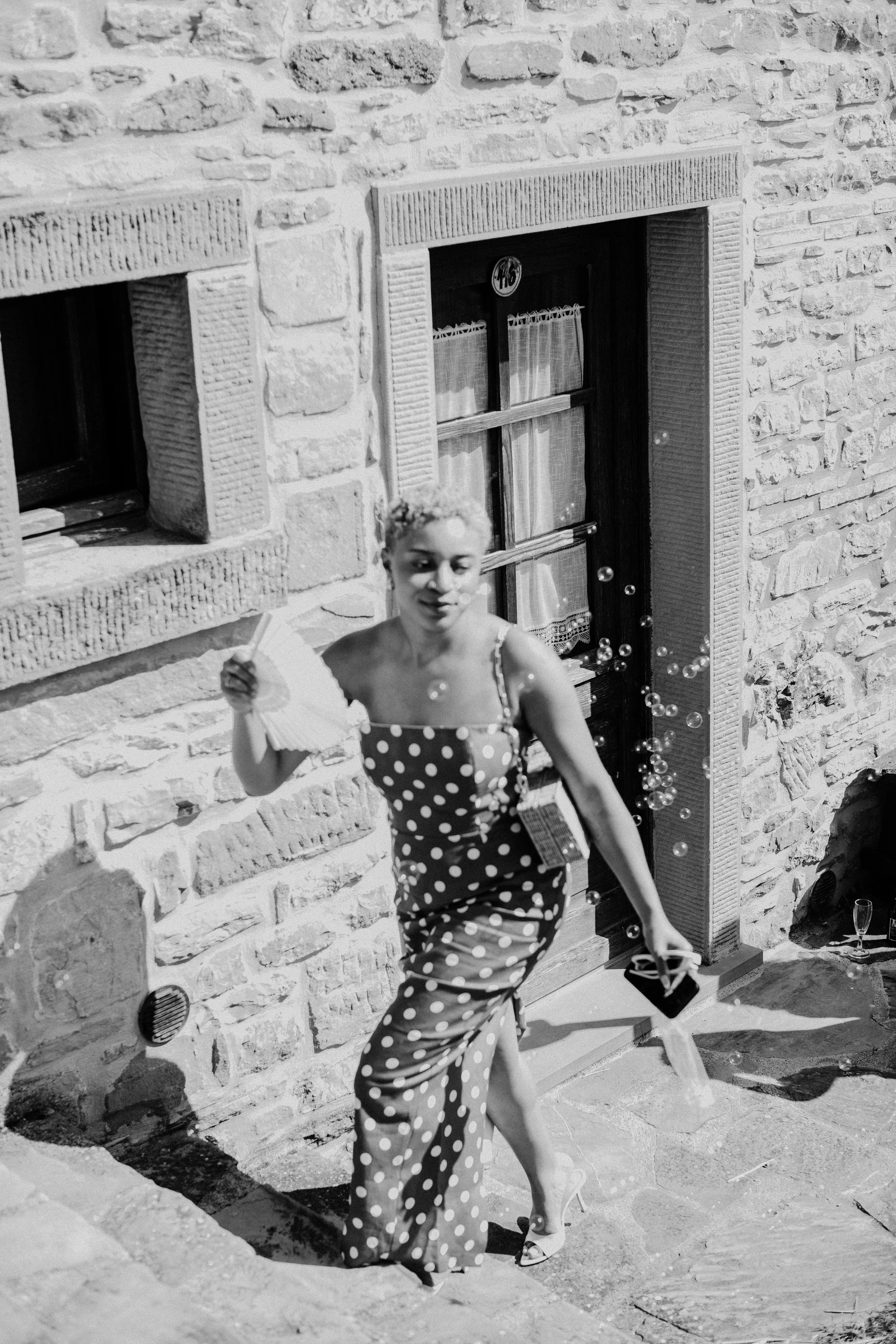
For couples who want a polished visual language without feeling over-directed, this distinction matters. The result can feel refined and emotionally genuine at the same time.
That is where restraint does its work.
5. Photograph the in-between moments
The central moments matter, but they are rarely the whole story.
A parent smoothing a collar. Friends standing together after dinner. A child carrying flowers through the grass. Someone watching the ceremony from the edge of the crowd. Hands around a coffee cup the next morning. These are the details that bring scale and intimacy to a wedding gallery.
They also give the final story room to breathe.
A cinematic approach depends on transitions. The walk between locations. The pause before guests arrive. The shift from daylight to evening. The seconds after the ceremony, when the couple is no longer performing the ritual and has not yet entered the celebration.
These photographs may not be the ones that appear first in a portfolio. They are often the ones that become more important over time.
The day is made of more than its highlights.
A framework, not a formula
A framework should create freedom, not repetition.
For a destination wedding, the essential questions are simple:
- What does this place feel like?
- How does the light move through it?
- What parts of the weekend carry the most meaning?
- Where can the couple be present rather than perform?
- Which details will help the gallery feel specific to them?
The answers will change from one wedding to the next. That is the point.
Our work across creative direction and editorial photography is guided by the same principles: start with what is present, make considered choices, and leave room for the unexpected. A location can shape the mood. A change in weather can alter the pace. A quiet afternoon can become one of the most memorable parts of the weekend.
For couples planning a destination celebration, the best luxury wedding photography is not necessarily the most elaborate. It is the work that understands the difference between directing a scene and interrupting it.
The final gallery should feel like a place you can return to : the warmth, the distance, the people, the light.
A wedding remembered in full.